Understanding the AED.
Understand the AED as support and avoid contact during analysis and shock.
Adults · Follow the device’s prompts
Start with chapter 1Open separate knowledge test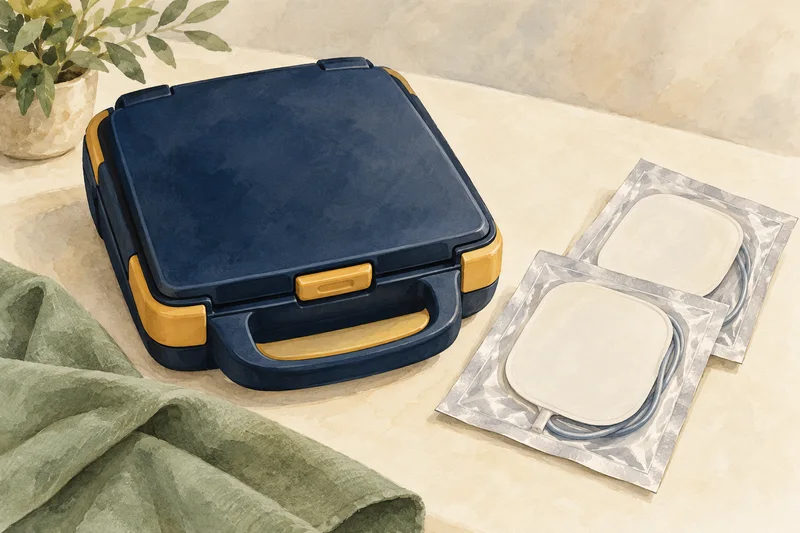
Editorial learning version · sources as of 19.10.2026. Independent final professional approval remains open. Practise physical techniques in a guided in-person course. No recognised certificate for driving licences or workplaces. The sources are not partners or certifiers of this offer.
A second helper brings an AED to an adult resuscitation already in progress.
The three key points remain readable without motion. Physical techniques require practical instruction.
A device with clear prompts
An automated external defibrillator examines the heart rhythm and recommends a shock for certain rhythms. Switch it on and follow the spoken and visual instructions. Devices differ. A recommendation for or against a shock does not say that the person is well again.
Key point: Connect the AED; its prompts guide the process.
Electrodes and no contact
Stick the electrodes onto the bare chest as shown on the device or pads. During rhythm analysis and shock delivery, nobody may touch the person. Say this clearly and check. This learning illustration shows neither a functioning device nor authoritative electrode positions.
Key point: During analysis and shock: all hands off.
Keep helping as a team
With several helpers, one person can prepare the AED while another continues compressions until the device prompts a pause. After analysis and any shock, immediately follow the instruction to resume. Leave the AED connected. Children need an age- and device-appropriate procedure; follow EH16 and the device guidance.
Key point: No shock advised does not mean finished.
Decide and check for yourself.
Five questions: Understanding the AED.
One answer per question. You get an immediate explanation and may retry as often as you like. Answers last only until reload; optionally, test completion is saved on this device.
0 of 5 questions attempted · no certificate