
Helping safely.
Recognise hazards, keep your distance and involve helpers directly.
Young people and adults · Self-protection
Start with chapter 1Open separate knowledge test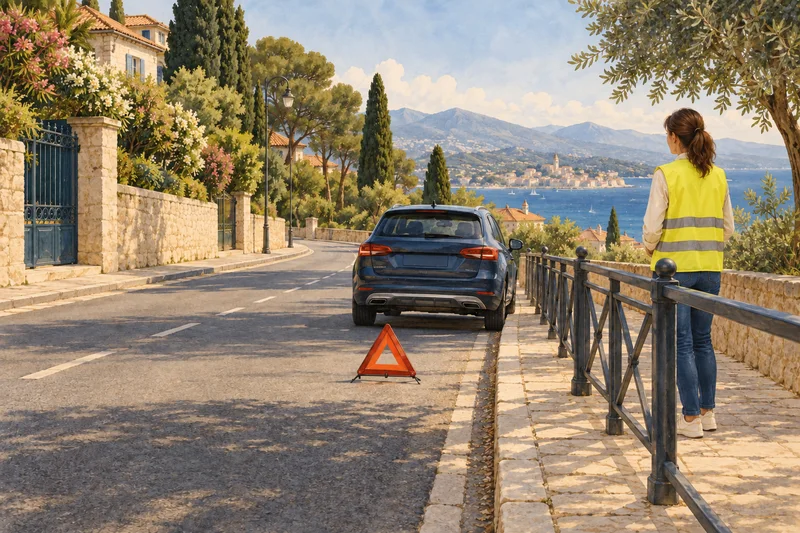
Editorial learning version · sources as of 19.10.2026. Independent final professional approval remains open. Practise physical techniques in a guided in-person course. No recognised certificate for driving licences or workplaces. The sources are not partners or certifiers of this offer.
A damaged car stands by a road. You see traffic, a leaking liquid and a person at the roadside.
The three key points remain readable without motion. Physical techniques require practical instruction.
Look at the surroundings first
Helping starts with a brief check of your own safety: traffic, smoke, electricity and water can also endanger helpers. Do not enter an obviously dangerous area. Call for help from a safe position and describe the hazard too. A brave approach does not replace a safe rescue.
Key point: Choose a safe position before approaching.
Different hazards need different help
Smoke and unknown fumes are no place for unprotected members of the public. Keep your distance from high voltage and alert specialists. Near water, help from the safe bank wherever possible. At a road accident, watch for other vehicles; a high-visibility vest makes you visible but does not protect against a collision.
Key point: Do not become a second casualty yourself.
Address one person directly
Instead of just calling for help in general, address someone directly: “You in the blue jacket: please call 112 and come back.” Another person can show the access route. Allocate tasks according to the actual situation. Stay only where it is safe yourself.
Key point: State the task and ask for feedback.
Decide and check for yourself.
Five questions: Helping safely.
One answer per question. You get an immediate explanation and may retry as often as you like. Answers last only until reload; optionally, test completion is saved on this device.
0 of 5 questions attempted · no certificate