Dressings and materials.
Recognise materials and distinguish small wounds from injuries needing medical assessment.
Adolescents and adults · Material model on paper only
Start with chapter 1Open separate knowledge test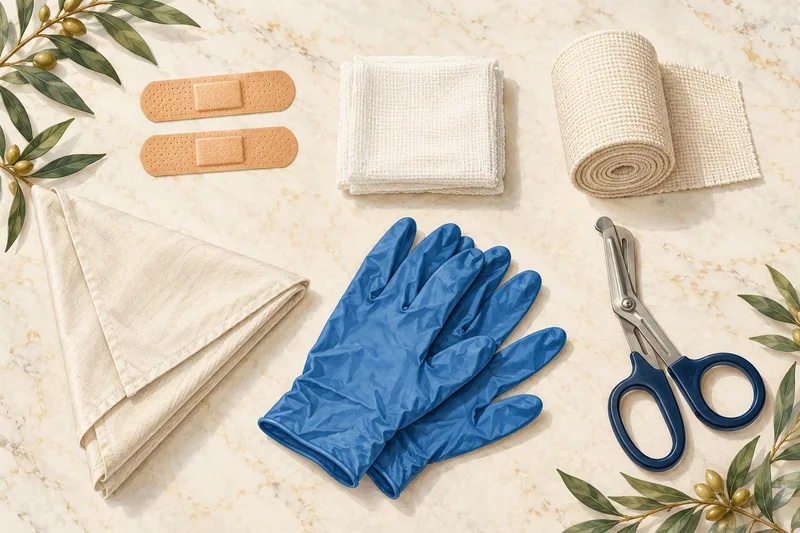
Editorial learning version · sources as of 19.10.2026. Independent final professional approval remains open. Practise physical techniques in a guided in-person course. No recognised certificate for driving licences or workplaces. The sources are not partners or certifiers of this offer.
You check a fictional first aid kit. Dressing pads, plasters, gauze bandages and disposable gloves are ready.
The three key points remain readable without motion. Physical techniques require practical instruction.
What the materials do
Disposable gloves provide self-protection. A sterile dressing pad covers a wound; a gauze bandage can hold the pad in place. A plaster protects suitable small wounds. Avoid touching the wound-facing side of a sterile pad if possible. Material is useful only when accessible, complete and still usable.
Key point: Covering, fixing and self-protection are different tasks.
Secure a dressing safely
A bandage should hold the dressing and must not constrict unnecessarily. Watch for increasing pain, numbness or discoloured fingers. These signs need correction and medical help if necessary. A paper model is enough for this unit: secure a paper pad with two strips of adhesive tape, without wrapping anyone.
Key point: Do not try a tight bandage on a partner.
Limits of minor self-care
Deep or gaping wounds, bites, heavy contamination and ongoing bleeding need medical assessment. Tetanus protection is also checked medically. Do not rub a foreign body out of the eye or remove it with tools. Seek help for heavy or persistent nosebleeds; tilt the head forward rather than letting blood run into the throat.
Key point: Looking small does not automatically mean harmless.
Decide and check for yourself.
Five questions: Dressings and materials.
One answer per question. You get an immediate explanation and may retry as often as you like. Answers last only until reload; optionally, test completion is saved on this device.
0 of 5 questions attempted · no certificate