Consciousness and breathing.
Recognise unresponsiveness and abnormal breathing as time-critical.
Adults · Children covered separately in EH16
Start with chapter 1Open separate knowledge test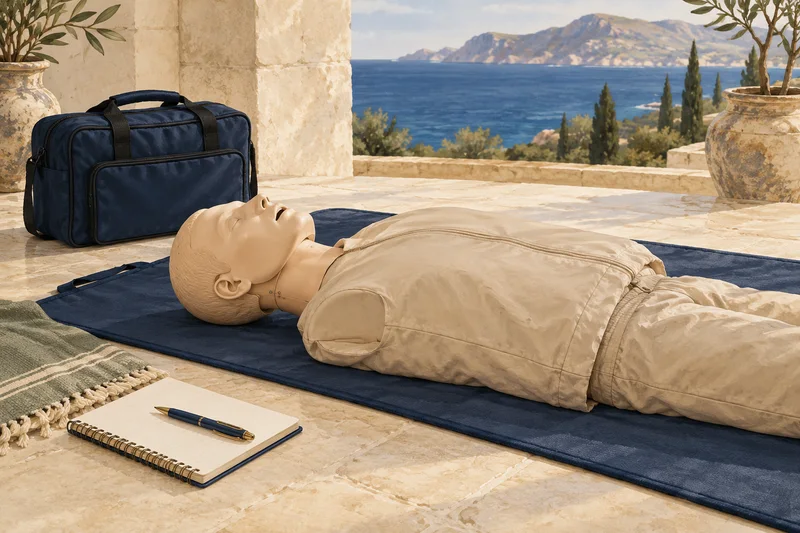
Editorial learning version · sources as of 19.10.2026. Independent final professional approval remains open. Practise physical techniques in a guided in-person course. No recognised certificate for driving licences or workplaces. The sources are not partners or certifiers of this offer.
An adult is lying in a station. The area is safe; they do not respond to speech or careful touch.
The three key points remain readable without motion. Physical techniques require practical instruction.
No response: call for help early
Check whether the adult responds by speaking loudly and gently touching their shoulders. If they do not respond, have someone call 112 immediately or call yourself on speakerphone. Stay with the person if possible. The GRC 2025 guideline calls for alerting help as soon as unresponsiveness has been established.
Key point: Do not spend a long time looking for a cause first.
Assessing breathing
Open the adult’s airway by gently tilting the head back and lifting the chin. Check for normal breathing by looking, listening and feeling for no more than ten seconds. Infrequent, noisy gasps do not count as normal breathing. If breathing is absent or abnormal, begin resuscitation immediately.
Key point: Gasping is not a reassuring sign.
Normal breathing still needs monitoring
If the person is unresponsive but breathing normally, the recovery position helps keep the airway open. Do not leave them alone and keep checking their breathing. If breathing becomes abnormal, return them to their back and start resuscitation. If an injury is suspected, avoid unnecessary movement; the airway and lifesaving measures take priority.
Key point: The recovery position is not the answer to absent normal breathing.
Decide and check for yourself.
Five questions: Consciousness and breathing.
One answer per question. You get an immediate explanation and may retry as often as you like. Answers last only until reload; optionally, test completion is saved on this device.
0 of 5 questions attempted · no certificate